
SMS Alternatives: Why Your Business Needs Rich Messaging
 Rojo Rizelle
Explore why traditional SMS is no longer enough for business. This guide covers the top SMS alternatives, such as WhatsApp and LINE, and how rich messaging can help you better connect with your customers.
Introduction
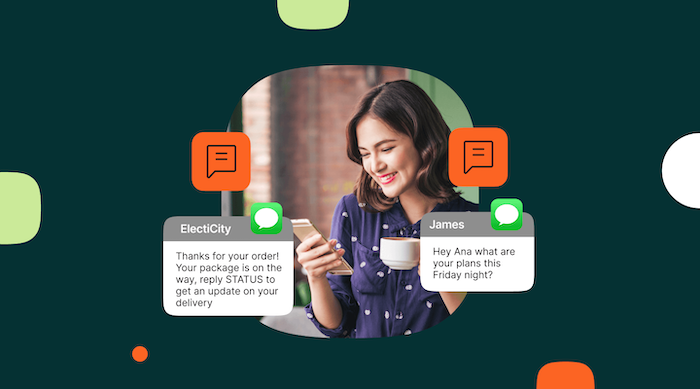
For decades, SMS (Short Message Service) has been the king of mobile communication. It was simple, reliable, and reached every phone on the planet. But in today's fast-paced, highly visual world, its limitations are starting to show. Businesses that still rely solely on plain text are finding it increasingly difficult to cut through the noise and engage their customers; they are realizing that they also need to utilize these SMS alternatives.
Customers want to have real conversations, see pictures, and get instant replies, which boring SMS cannot do. Because many different apps are popular in various countries (such as WhatsApp in India and WeChat in China), it is essential to know which ones to use. This guide explains why SMS is no longer enough and shows you the best new ways to communicate with your customers.
Understanding SMS Limitations

To understand why many businesses are seeking SMS alternatives, we must first examine the reasons why traditional SMS is failing. It has three big problems.
Technical Constraints
The biggest problem with SMS is that it is very limited. You can only type 160 characters of plain text. You cannot send a high-quality picture of your product, a helpful video, or even use bold words. This makes your messages look boring and flat.
Cost and Scalability Issues
Sending SMS messages can get very expensive, fast. Businesses have to pay for every single text they send. If you want to send a message to a customer in another country, the cost can be very high. This makes it hard for businesses to grow or talk to all their customers without spending a lot of money.
Lack of Engagement Tools
SMS is like a one-way street. You send a message, but you have no idea what happens next. There are no "read receipts" to see if the customer read it. There are no "typing indicators" to show you they are replying. You also cannot add helpful buttons like "Shop Now" or "Book Appointment." This makes it impossible to have a real, interactive conversation.
Top SMS Alternatives for Business Communication
The good news is that many great SMS alternatives fix all these problems. These apps are built for rich, two-way conversations.
Rich Communication Services (RCS)
Think of RCS as "SMS 2.0." It is the new, upgraded version of text messaging that is built into many Android phones. It is much better than old SMS. It lets businesses have a verified profile with a logo (so you know it is really them), send high-quality pictures and videos, and even add buttons and carousels. The main challenge is that it is not on every phone yet. It depends on phone companies and phone makers like Google to turn it on.
WhatsApp Business
With over 2 billion users, WhatsApp is the most popular chat app in the world. This makes it the most powerful SMS alternative for most businesses. The WhatsApp Business API is a special tool that lets businesses connect to WhatsApp in a professional way. It allows for a verified green checkmark, sending product catalogs right in the chat, and using auto-reply bots for 24/7 customer support. It is used for everything from sales to support to sending order updates.
Apple iMessage for Business Chat
This is Apple's special tool for businesses, and it works inside the Messages app on every iPhone, iPad, and Mac. It is a very rich and secure experience. Customers can book appointments, browse products, and even pay for things safely using Apple Pay without ever leaving the chat. The only downside is that it only works for customers who have an Apple device.
Facebook Messenger
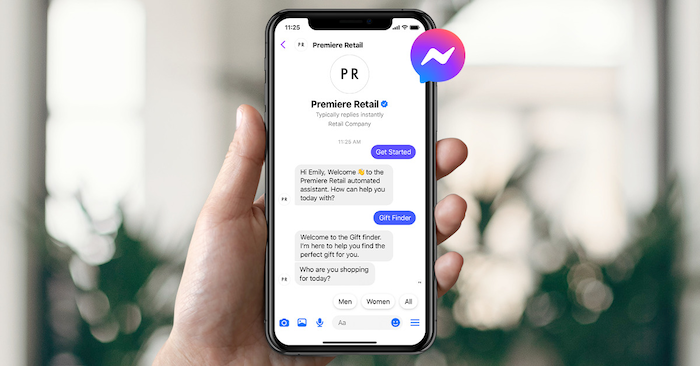
Facebook Messenger is a global powerhouse for conversational commerce. Its integration with Facebook and Instagram ads enables businesses to initiate conversations directly from an ad (Click-to-Message), and its robust bot platform is widely utilized for a range of applications, from automated customer service to sales funnels. It is tightly integrated with Facebook and Instagram, making it essential for businesses using those platforms.
LINE and WeChat
In many parts of Asia, these apps are "super-apps," meaning people use them for everything. WeChat is essential for any business in China. LINE is the most important app in Japan, Thailand, and Taiwan. These apps are whole worlds for businesses. They have built-in payment systems, menus, and even mini-programs. Using a LINE chatbot is a must for any business in those countries.
Telegram for Business
Telegram is famous for being very private and fast, serving as a robust optional alternative for specific niches. It has become a great tool for building large online groups. For businesses, its best features are Channels (which let you send messages to an unlimited number of followers) and its powerful Bot platform. It is very popular with tech companies and in certain parts of the world.
Building Communication Strategies with SMS Alternatives
You cannot just pick an app and hope it works. You need a smart plan.
Choosing the Right Platform
The most important step is to find out where your customers are. If your customers are all in Thailand, you must use LINE. If your customers are in India or Brazil, you must use WhatsApp. Do not make your customers download a new app to talk to you. You must go to the app they already love and use every day.
Integrating Business Messaging APIs
To let your whole team answer messages from one business number, you cannot just use the normal app on one phone. You need to use the official business "API." This is a special connection that lets you plug the chat app into a real business tool.
This is where a Business Solution Provider (BSP) like Botcake is so helpful. A BSP gives you the software to make the API easy to use. Instead of needing a team of coders, you can use a "no-code" platform to build your chat flows. Botcake gives you one single unified inbox so your team can answer chats from WhatsApp, Messenger, and Instagram, all in one place. Furthermore, it offers an AI reply feature that is available 24/7, using pre-trained triggers to answer common questions. This then integrates with an all-in-one management system, such as Pancake, to streamline your entire customer workflow.
Designing Conversational Flows
A "conversational flow" is the path a chat takes. You need to plan it out. A good flow should be simple and feel like a natural conversation. It should use buttons and quick replies to guide the person. Most importantly, it must always have an easy way for a person to ask to "talk to a human" if they get stuck or frustrated.
Testing and Deployment
Before you show your chatbot to all your customers, you must test it. Have your team pretend to be customers and try to break it. Try different welcome messages to see which one people like more (this is called A/B testing). You should always be checking your results to make your chat flows better.
Advanced Features and Optimization Strategies
The best part of these SMS alternatives is all the cool, advanced things you can do.
Rich Media and Interactive UI
These are the biggest upgrades from SMS. You are no longer stuck with plain text. You can use:
-
Buttons and Quick Replies: These guide the customer and make the chat much faster.
-
Carousels: These are swipeable cards that let you show off different products or options.
-
Product Catalogs: You can have your whole store right inside the chat, like with the WhatsApp Catalog feature.
-
In-App Payments: You can let people pay for things safely without ever leaving the conversation.
CRM and Analytics Integration
Your chat platform should connect to your customer database program (or CRM). This is super important. When a new person chats with you, their name and chat history should be automatically saved to their profile in your CRM. This lets you track the whole customer journey and send them personal messages in the future based on what you know they like.
Automation and AI
This is how you can talk to thousands of people at once. You can use chatbots (automation) to answer all the common, easy questions like "Where is my order?" or "What are your hours?" This frees up your human team to focus on the hard questions and the customers who are ready to buy.
By using a conversational AI for a sales bot, the fitness brand Kingsport was able to answer 85% of all questions automatically. This made their team 5 times more efficient and led to a 13% conversion rate from their chats.
Use Cases of SMS Alternatives in Action

These new tools can be used in many ways to help your business.
Customer Support
You can have a chatbot that works 24/7 to give instant answers. A bot can also ask for the customer's name and order number before it passes the chat to a human. This way, the human agent has all the info they need to help right away. The USAC Chiropractic Clinic used a chatbot to help people book appointments. This simple automation led to a 66% increase in confirmed bookings.
Marketing and Sales
You can run Click-to-Message ads that send people from a Facebook or Instagram ad right into a chat with your bot. You can also send special offers and promotions to your followers. The fashion brand Ilaby Kids used this idea to make shopping in chat super easy. The result was that they doubled their total sales because the experience was so smooth.
Operations and Notifications
You can send an appointment reminder on WhatsApp with "Confirm" or "Cancel" buttons, and the chatbot can instantly notify staff of the customer's response. You can also send a delivery update with a live map so the customer can track their package. This is much more helpful than a plain text message.
Best Practices for Implementing SMS Alternatives
To do a great job, you should follow a few key rules.
-
Have a Clear Goal: Know what you want to achieve. For example, "I want to get 50 new customers from chat this month."
-
Make it Fun and Easy: The platform you choose should be helpful and intuitive for customers, not annoying. Always ensure they have an easy and obvious way to talk to a real person if they need to.
-
Be Safe and Honest: You must protect your customers' private information and follow all the rules, like GDPR. You also have to follow the rules of each app, like getting your message templates approved by WhatsApp.
-
Continuous Improvement: A chatbot is never "finished." You must monitor analytics to optimize your conversational flows and stay updated with new platform upgrades to keep your bot effective.
Conclusion
The way businesses talk to customers has moved far beyond simple SMS. Customers now want fun, fast, and rich chats on the apps they use every day, and businesses that do not adapt will be left behind. The future of business is about having good conversations. The first step is to find out where your customers are, pick the right platform, and find a partner to help you build these powerful chat experiences. To manage all these channels in one place and start automating your sales and support, explore a unified messaging platform like Botcake.
Related blogs

Chatbot AI Messenger: Cách hoạt động, ứng dụng và triển khai
How to Set Up Meta Business AI on Messenger
Top E-commerce Use Cases of Meta Business AI

Discover how your business can connect with customers 24/7 with Botcake
- Automate your customer messaging flow
- React thousands with bulk marketing message campaigns
- Blend AI power seamlessly with your customer service