
WhatsApp API Pricing: A Simple Guide for Businesses in 2025
 Rojo Rizelle
Understanding the WhatsApp Business API pricing model is key for businesses to allocate budgets effectively. This guide breaks down the costs, helping you leverage paid conversations to boost engagement and drive revenue.
Demystifying WhatsApp Business API Pricing Structure
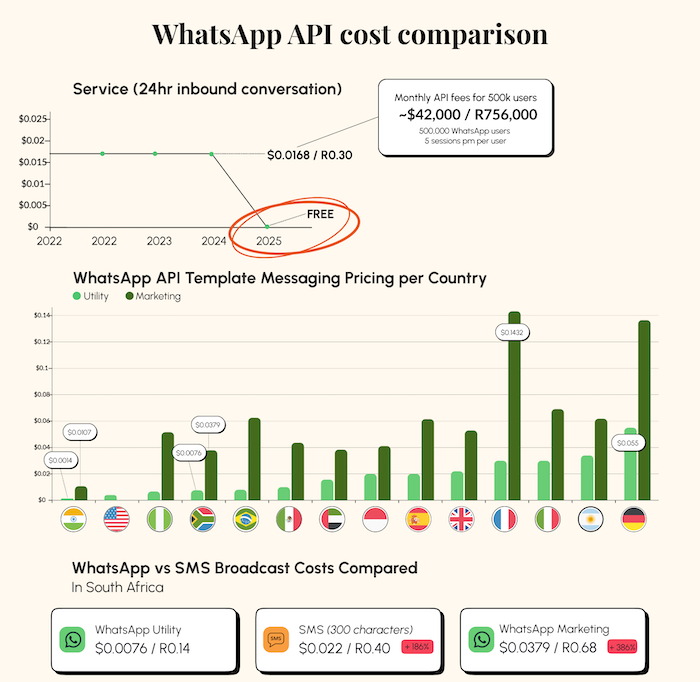
A few years ago, Meta changed the way it charges for the API. It moved from a confusing per-message fee to a much simpler model. It is essential to understand this new structure.
The Conversation-Based Pricing Model
The most important thing to know about WhatsApp API pricing is that you do not pay for each message. Instead, you pay for each conversation.
A "conversation" is a 24-hour chat with a customer. This 24-hour window starts when you send the first message to a customer or when you reply to their message. During this window, you can send as many messages as you want back and forth, and you will only be charged for one conversation. This system encourages real, helpful conversations instead of just one-way ads.
Types of Conversations and Their Costs
Not all conversations cost the same. Meta has different categories, and each has its own price. This is the most important part of your budget.
1. User-Initiated Conversations (Service Conversations): This is when a customer sends you the first message. For example, they might ask about a product or need help with an order. When you reply, a "service conversation" starts. These are the cheapest type of conversation. WhatsApp wants to help businesses be responsive, so it is cheaper to reply to customers.
2. Business-Initiated Conversations: This is when you send the first message to a customer. To do this, you must use a pre-approved Message Template. These conversations cost more. They are also split into three types:
-
Utility conversations: These relate to a specific, agreed-upon transaction, like "Your order #12345 has been shipped and will arrive on Friday." These have a moderate cost, which varies by the customer's country.
-
Authentication conversations: These are for security, used to send one-time passcodes (OTPs) like "Your verification code is 882-123. Do not share this code." This is typically the lowest-cost business-initiated category, as seen on the official pricing page.
-
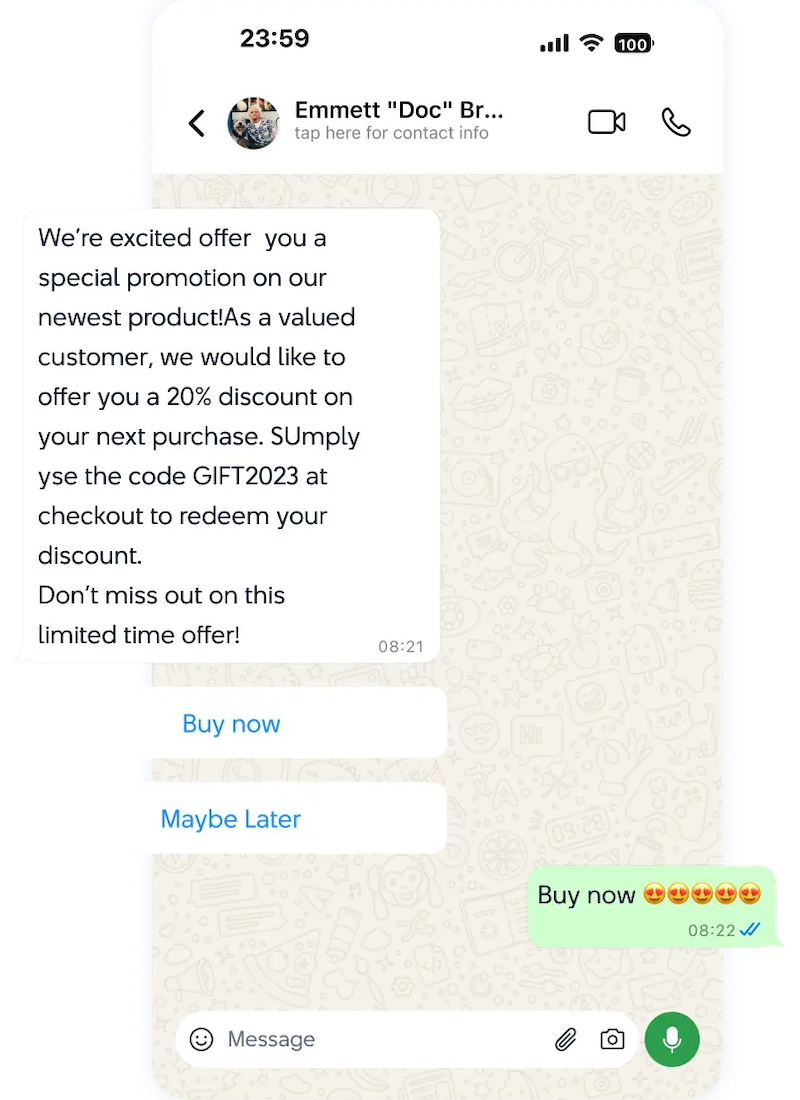
Marketing conversations: These include promotions, new product announcements, or cart abandonment reminders, such as "Flash Sale! Get 25% off all weekend. Shop now:" As these are promotional, they are the most expensive conversation category. You can check current rates here.
To estimate your potential costs based on these categories, you can use a WhatsApp pricing calculator.
The Free Tier
To help businesses get started, WhatsApp provides every business with 1,000 free user-initiated (service) conversations each month. This is a great benefit. If you are a small business that mainly uses WhatsApp to answer customer questions, you might not have to pay anything at all.
Country-Specific Pricing
It is also important to know that the price for each conversation is different depending on the customer's country. For example, a marketing chat with a customer in the United States will have a different price than one with a customer in Vietnam. The price is always based on the customer's phone number's country code.
Factors Influencing Your WhatsApp API Bill

Your final bill is a mix of a few different costs. Understanding these will help you guess and control how much you spend each month.
Volume and Type of Conversations
This is the biggest factor. The more chats you have, the more you will pay. But the type of chat is very important. A business sending 10,000 marketing messages will pay much more than a business having 10,000 support chats started by customers.
For example, a marketing campaign with coupons might be expensive. But if it leads to a 70% coupon conversion rate, the money you make can be huge. This is why it is very important to choose the right category for your messages.
Free Entry Points
WhatsApp gives a special discount for some chats. If a customer messages you by clicking a WhatsApp ad on Facebook or Instagram, that chat is free for 72 hours, not just 24. This is a great reason to run these kinds of ads. And the results can be amazing. By using these free entry points with a chatbot, businesses have seen a 60% increase in leads from WhatsApp and a 79% lower cost to get each lead.
Third-Party Provider Fees (BSP Costs)
You cannot connect to the WhatsApp API on your own. You need a partner called a Business Solution Provider (BSP). These partners, such as Botcake, provide the software that makes the API easy to use. Emphasizing cost-efficiency, Botcake does not charge businesses fees for creating and managing WhatsApp messages, helping them save costs while ensuring efficiency and real-time data. They provide a shared inbox, a chatbot builder, and reports.
For this service, BSPs add their own fee on top of Meta's charges. Some charge a little extra for each conversation. Others have a flat monthly fee. It is very important to choose a BSP with clear and fair prices.
Strategies for Optimizing WhatsApp API Costs
You don't have to accept a high bill. There are several effective ways to reduce your WhatsApp API pricing while achieving excellent results.
Encourage User-Initiated Conversations
Since the first 1,000 user-initiated conversations are free each month, and they are cheaper in general, you should make it as easy as possible for customers to message you first. You can do this by:
-
Adding a WhatsApp chat button to every page of your website.
-
Putting your WhatsApp link in your social media bios.
-
Print a QR code that links to your WhatsApp chat on your packaging or in-store.
Use Chatbots and Automation Smartly
A chatbot can be an excellent tool for saving money. It can answer common questions instantly. This often solves a customer's problem within a 24-hour conversation window. This is much better than a slow human reply that might stretch the conversation into a second paid day.
Gangwhoo Hospital successfully scaled its international customer service. This automation directly led to a 10% increase in purchases and a 1.9 times higher conversion rate from messages, proving that intelligent automation delivers a significant return on investment.
Choose the Right BSP
Your choice of a BSP has a significant impact on your final cost. You should look for a partner that provides excellent value. For example, a platform like Botcake might offer a complete set of tools, including a unified inbox for WhatsApp, Messenger, and Instagram, all within its pricing plan. This can save you from having to pay for multiple software tools. You can also use a tool like a WhatsApp pricing calculator to estimate your costs before you commit to a plan.
Understanding WhatsApp API pricing is simple once you break it down: it's all about conversations, not messages. The model is continually evolving as Meta works to enhance the platform, with a clear trend toward rewarding businesses that facilitate valuable, personal conversations while preventing spam. Mastering the distinction between user-initiated and business-initiated conversations is crucial for effective budget management. When you're ready to move beyond the free app and unlock the full potential of conversational commerce, a solution like Botcake can simplify the entire process, providing the tools and support you need to turn every conversation into a revenue-generating opportunity.
Related blogs
LINE Chatbot: Guide to Business Automation in Asia 2026

How AI Changes Customer Experience: A Complete Guide
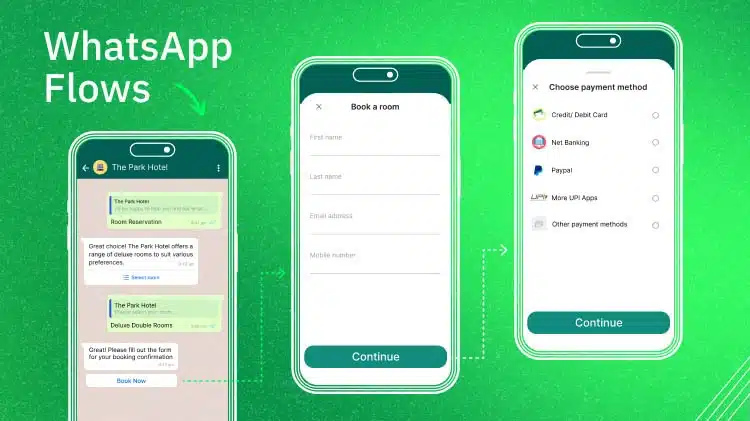
WhatsApp Flows: Revolutionizing Conversational Experiences on the World's Favorite Messaging App

Discover how your business can connect with customers 24/7 with Botcake
- Automate your customer messaging flow
- React thousands with bulk marketing message campaigns
- Blend AI power seamlessly with your customer service