
WhatsApp API Software: Unlocking Advanced Communication for Businesses
 Duhapa Dennis
Companies can bid farewell to manual dialogues and welcome automated, data-driven communication with WhatsApp API software. It's the key to delivering real-time, customized customer interaction. Discover why companies worldwide are adopting this powerful solution for growth.
Introduction
Designed for medium and large businesses, WhatsApp API helps teams manage customer messages seamlessly. It enables integration with CRM systems, chatbots, and support tools, facilitating more efficient workflows. In short, it transforms WhatsApp into a powerful business communication channel.
Understanding the WhatsApp Business API: A Quick Recap

Before moving on, let’s understand what the WhatsApp Business API really offers.
Core Functionality
The WhatsApp Business API assists businesses in handling conversations at scale while making messages friendly and personal. It automates notifications such as order confirmation and delivery alerts and supports 24/7 chatbot customer service. It also integrates with other tools so that teams can view chats, data, and reports in one location - making WhatsApp a whole communication center.
Key Differences from WhatsApp Business App
The main difference is scale. The regular app is suitable for small groups that do chats manually, while the API can handle larger businesses that process thousands of messages per day. It supports multi-agent access, is integrated with CRMs, and supports automation and analytics - it is an end-to-end business solution for sales, customer support, and marketing.
Key Features of WhatsApp API Software
Next, let’s break down the main features that help businesses communicate faster and smarter.
Message Management and Automation
One big advantage of WhatsApp API software is that it can automate communication. Businesses can set up quick replies for common questions, use chatbots to guide customers through orders, or send automatic updates like delivery notifications. This helps save time and ensures customers always get fast replies.
Pre-approved message templates are really recommended for key notifications such as order confirmations or payment reminders. It gives you uniformity in messaging, compliance with Meta's policies, and ease of management.
CRM and Integration Capabilities
WhatsApp API software aligns perfectly with your existing infrastructure, such as CRMs or help desks, to build an integrated process. If integrated, chat history and customer information are automatically synced, allowing teams to offer more personalized service.
It also facilitates cross-department collaboration - sales, for example, can follow up on leads directly within WhatsApp, and support agents can view a customer's full history before they respond.
Multi-User Access and Team Collaboration
Unlike the standard WhatsApp application, the API variant accommodates several agents serving a single business number. This is ideal for big teams handling a lot of conversations on a daily basis. Managers have the option of handing over chats, making internal remarks, and monitoring performance to deliver speedy, uniform service. Collaborative dashboards and access controls also enhance team efforts, even across locations or time zones.
Analytics and Reporting
With level analytics, businesses are able to track message delivery, response rate, and campaign performance in real time. What drives teams from the reports is data that informs them to refine strategies, improve engagement, and determine what works best in content form. Managers can also track productivity, response time, and continuously improve the customer experience.
Customer Segmentation and Personalization
The app helps you keep your contacts organized with labels like “new lead,” “loyal customer,” or “inactive user.” It becomes easier to send messages that truly match what each group needs. For instance, you can offer discounts to returning customers or share useful tips with new ones. When your messages feel personal and relevant, people are more likely to respond and keep coming back.
Benefits of Implementing WhatsApp API Software
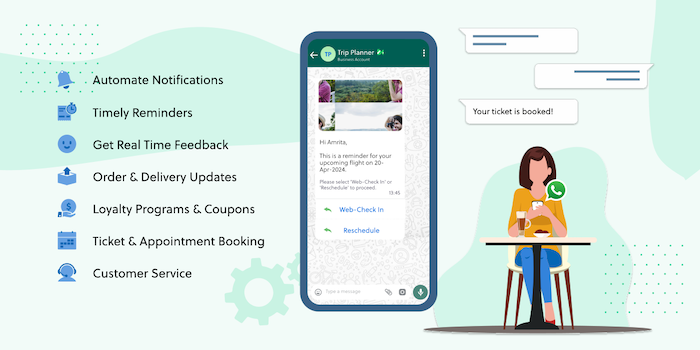
Before choosing a platform, it’s worth understanding the real advantages WhatsApp API software brings to business communication and growth.
Enhanced Customer Experience
With WhatsApp API software, your company can offer instant and personalized support. Messages flow through in an instant - automated or replied to in real time - so customers don't have to wait. With CRM integration, agents can view customer history and reply more personally. You can also send proactive updates like order confirmation or reminders, keeping the customer up to speed without needing to inquire.
Increased Efficiency and Productivity for Growth
WhatsApp API simplifies customer interactions by automating repetitive chats such as FAQs and order updates, freeing teams to focus on complex inquiries. Centralized communication keeps every message, note, and update in one place for smoother collaboration and faster replies. As your business expands, the platform scales effortlessly, supporting multiple agents and high message volumes to maintain productivity and long-term growth.
Improved Sales and Marketing
The WhatsApp API helps you connect directly with customers, one by one or by segmented campaigns. You can forward offers, updates, and personalized messages to customers who receive them instantly on a platform they use daily. It's a simpler, faster, and more effective way of marketing compared to email or SMS.
Better Data and Insights
Every message sent through the WhatsApp API provides you with excellent data. You can see delivery, read, and response rates so that you understand what performs best. This data enhances your content, timing, and targeting - so subsequent campaigns are smarter, more efficient, and profitable.
Choosing the Right WhatsApp API Software
Not all WhatsApp API tools are the same. Here’s how to choose the one that fits your business best.
Key Considerations
- Step 1: Start by choosing software that fits your business needs. Make sure it includes essential features like automation, message templates, chat routing, and analytics.
- Step 2: Next, review the pricing model - some tools charge per message, others by monthly plan. Pick one that matches your message volume and budget.
- Step 3: Make sure the software works well with your existing tools, like your CRM or e-commerce system. It should connect easily without a complicated setup.
- Step 4: Don’t forget about security and privacy. Choose a provider that keeps your data safe and follows rules like GDPR to protect your customers.
- Step 5: Lastly, check the quality of support and training. A helpful support team and clear onboarding process will make setup and daily use much easier, especially when you’re just getting started.
Top Providers / Examples (overview)
Generally, there are three types of WhatsApp API providers. Each option has pros and cons. CRM-integrated tools are efficient if you already use a CRM, dedicated ones go deeper into WhatsApp features, and omnichannel platforms are best if you plan to expand across multiple communication channels. If you don’t know which is the trusted provider, Botcake.io is a good option for you.
-
CRM-integrated platforms – Combine messaging with customer management for convenience.
-
Dedicated WhatsApp platforms – Focus purely on WhatsApp, offering more advanced and specialized tools.
-
Omnichannel systems – Manage WhatsApp alongside other channels like Messenger, Instagram, or SMS.
Future Trends in WhatsApp API Software

As technology keeps improving, WhatsApp API software will also get smarter - with better tools, smoother integrations, and more ways to create engaging customer experiences.
Advanced AI and Machine Learning
Future chatbots will go beyond simple FAQs - they’ll understand what customers need and respond proactively. With AI and machine learning, businesses can send smarter, better-timed, and more relevant messages that feel truly personal.
Deeper Integration
WhatsApp will soon connect seamlessly with more tools - from payment systems to AR, voice assistants, and IoT devices. Customers might complete purchases, track orders, or even control smart gadgets - all without leaving the chat.
Enhanced Rich Media and Interactive Features
Messages will become more interactive, with buttons, carousels, forms, and mini-apps built right into WhatsApp. Instead of just reading messages, customers can take action instantly, making conversations faster and more engaging.
Conclusion
Recap of the Power of WhatsApp API Software
Today, businesses can't overlook the WhatsApp API. It enables faster, more personal, and efficient communications while maintaining professionalism and consistency to your brand voice. It enables automation, chat management, and analytics, allowing businesses to meet customers' expectations while scaling their operations. In a nutshell, it enables companies to connect with customers on one of the world's most trusted messaging platforms.
Call to Action
Now’s the perfect time to make the move. By using WhatsApp API software, you can improve customer experience, increase productivity, and stay ahead of competitors. Try reliable tools like Botcake.io to unlock the full potential of WhatsApp and take your business communication to the next level.
Related blogs

How AI Changes Customer Experience: A Complete Guide
WhatsApp Flows: Revolutionizing Conversational Experiences on the World's Favorite Messaging App

The Future of Event Engagement: Your Guide to Event Chatbots

Discover how your business can connect with customers 24/7 with Botcake
- Automate your customer messaging flow
- React thousands with bulk marketing message campaigns
- Blend AI power seamlessly with your customer service