

What does Marketing KPI mean? A Simple Guide for Businesses
 Duhapa Dennis
What does KPI marketing mean? This guide explains how to choose and track Key Performance Indicators. Learn to use the correct data to measure campaign success, stop guessing, and make smarter decisions to grow your business.
Introduction
Not long ago, marketing felt a lot like guesswork. Businesses would buy a large billboard or run a TV ad and simply hope it was effective. They had no real way of knowing who saw their ad or if it led to a sale. Today, marketing is primarily driven by data. We can track every click, every visit, and every purchase. However, having a vast amount of data is not enough. You need to know which numbers really matter. This is where KPIs come in. Understanding the kpi marketing meaning is the key to knowing if your marketing is actually working.
Defining Key Performance Indicators (KPIs) in Marketing
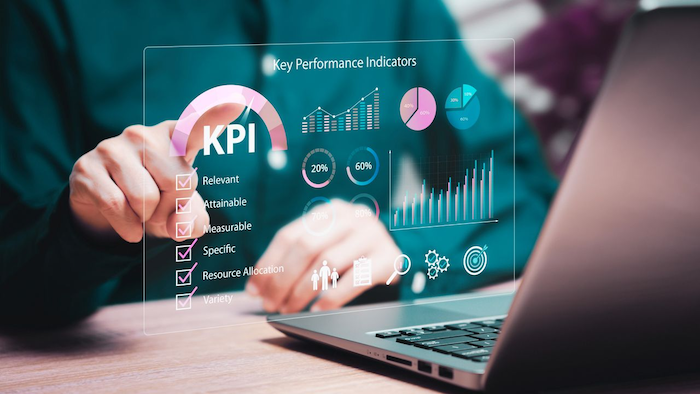
Let's start with the basics. The term "KPI marketing" might sound complicated, but it is actually straightforward.
What is a KPI?
"KPI" stands for Key Performance Indicator.
-
Key: This means it is one of the most important numbers.
-
Performance: It shows you how well you are performing or doing.
-
Indicator: It indicates whether you are on the right track.
A KPI is one of the most critical numbers that indicate how well your company is performing in relation to its key objectives. That’s why the goals you track with KPIs need to follow the SMART framework:
-
Specific: It is very clear (e.g., "get 100 new leads").
-
Measurable: You can count it (e.g., you can count to 100).
-
Achievable: You can actually reach it.
-
Relevant: It matters to your big business goal.
-
Time-bound: It has a deadline (e.g., "get 100 new leads this month").
The Difference Between KPIs, Metrics, and Goals
This is the part where many people get confused, but it is easy when you break it down.
-
Goal: This is your big-picture dream. It is what you want to achieve.
Example Goal: "I want to grow my online store."
-
Metric: This refers to any number that can be measured. You can have hundreds of metrics.
Example Metrics: Number of website visitors, likes on Instagram, emails you send, and number of sales.
-
KPI: This is the most critical metric (or two) that tells you if you are reaching your big goal.
Example KPI: If your goal is to "grow your online store," your main KPI would be "Total Sales Revenue per Month."
So, think of it this way: Your Goal is the destination (like reaching the beach). The Metrics are all the numbers on your car's dashboard (your speed, your engine temperature, how much gas is left). The KPI is the most critical number for that trip: the "distance to destination" on your GPS.
Why KPIs are Essential for Marketing Success
If you do not use KPIs, you are just guessing. Knowing your kpi marketing meaning is so important because it helps you:
-
See What Is Working: KPIs give you a clear report card. You can see at a glance if your marketing is a success or a failure.
-
Make Smart Decisions: With data, you can stop guessing and start knowing. If one ad campaign has a great KPI and another has a bad one, you know where to spend your money.
-
Prove Your Worth: KPIs help you show your boss (or yourself!) that the money you are spending on marketing is actually making the company more money. This is referred to as ROI (Return on Investment).
-
Get Better: You cannot improve what you do not measure. KPIs show you exactly where you are weak, allowing you to identify and address your problems and optimize your strategy.
Common KPI Categories in Marketing

There are many types of KPIs. The ones you choose depend on your specific goals. Here are the most common categories:
Awareness KPIs
These KPIs indicate the number of people aware of your brand. They are the "top of the funnel."
-
Website Traffic: How many people are visiting your website?
-
Social Media Reach & Impressions: How many people saw your Facebook post or Instagram Story?
-
Brand Mentions: How many people are talking about your brand online?
Engagement KPIs
These KPIs indicate the number of people interacting with your brand. They are not just looking; they are clicking, liking, and commenting.
-
Social Media Engagement Rate: What percentage of people who saw your post actually liked, shared, or commented on it?
-
Email Open Rate & Click-Through Rate (CTR): What percentage of people opened your email? Of those, what percentage clicked a link inside it?
-
Time on Page: When people visit your website, do they leave right away, or do they stay to read your content?
Conversion KPIs
These are some of the most critical KPIs. They tell you how many people took the action you wanted them to take.
-
Conversion Rate: What percentage of your website visitors bought something or signed up for your newsletter? This is a key metric.
-
Lead Generation: How many new potential customers (leads) did you get this month?
-
Cost Per Lead (CPL): How much money did it cost you to get one new lead?
For example, many businesses utilize click-to-message ads that feature a chatbot. An excellent conversion KPI would be tracking how many people who clicked the ad completed the chatbot flow. Businesses that do this well have seen a 41% drop in their cost per lead.
Customer Retention & Loyalty KPIs
These KPIs indicate whether your customers are remaining loyal to you. It is often more cost-effective to retain an existing customer than to acquire a new one.
-
Customer Lifetime Value (CLTV): How much money does an average customer spend with your business over their entire life?
-
Customer Retention Rate: What percentage of your customers from last year are still buying from you this year?
-
Repeat Purchase Rate: How many of your customers have come back to buy a second or third time?
A solution like Botcake can help businesses automate this process by boosting retention with timely re-engagement, leading to a 20% increase in repeat purchase rates from personalized offers. By boosting customer lifetime value (CLV) and achieving a 70% coupon redemption rate from chat offers, you can turn one-time buyers into loyal fans.
Revenue & ROI KPIs
These KPIs are primarily focused on financial metrics. They are what your boss or CEO cares about most.
-
Marketing Return on Investment (MROI): This is the ultimate KPI. For every $1 you spent on marketing, how many dollars did you get back?
-
Customer Acquisition Cost (CAC): How much does it cost, on average, to get one new paying customer?
-
Revenue Attributed to Marketing: How much of the company's total sales came directly from your marketing campaigns?
How to Choose and Set Up Effective Marketing KPIs
You cannot (and should not) track everything. The key is to choose the few KPIs that matter most to your specific goals.
Aligning KPIs with Business Objectives
This is the most important rule. Your KPIs MUST match your goals.
-
Start with your big Business Goal: (e.g., "Grow the company's revenue by 30% this year.")
-
Make a Marketing Goal: (e.g., "Our marketing team needs to bring in 500 new paying customers this year.")
-
Choose Your KPI: (e.g., The best KPI to track this goal is "Number of New Customers Acquired from Marketing" and "Customer Acquisition Cost (CAC).")
If your goal is simply to increase awareness of your brand, your KPI might be "Social Media Reach." But if your goal is to make sales, "Reach" is a bad KPI. Your KPI should be "Sales Conversion Rate."
Best Practices for KPI Selection
-
Keep it Focused: Do not track 50 KPIs. Choose 3-5 Key Performance Indicators that genuinely matter.
-
Make Sure You Can Track It: Do not pick a KPI that you have no way of measuring. Ensure your data is accurate and readily available.
-
Talk to Your Team: Ask your sales team and your managers what they think is the most important number to track.
Tools and Platforms for KPI Tracking
You do not have to track all this with a pencil and paper. You can use powerful tools:
-
Google Analytics: The best free tool for tracking all your website KPIs, like traffic, conversion rates, and time on page.
-
CRM Systems: A customer relationship management (CRM) system is perfect for tracking sales KPIs, like CAC and CLTV, and Pancake CRM.
-
Social Media Analytics: Apps like Facebook and Instagram have their own built-in analytics to track engagement and reach.
-
Chatbot Platforms: A multi-platform chatbot, like Botcake, will have its own dashboard to show you how many people are interacting with your bot, your bot's conversion rate, and where users are getting stuck.
Implementing and Analyzing Your Marketing KPIs
Once you have picked your KPIs, you need to use them.
Setting Baselines and Targets
You cannot know if you are winning if you do not know the score.
-
Find Your Baseline: Look at your data from last month. What is your current conversion rate? That number is your "baseline."
-
Set a Target: Now, set a realistic but challenging goal. (e.g., "Our baseline conversion rate is 2%. Our target for next month is 2.5%.")
Regular Monitoring and Reporting
Look at your KPIs regularly! Do not just set them and forget them. Many teams create a simple "dashboard" (a one-page report) that they review every week or month. This keeps everyone focused on the numbers that matter.
Interpreting KPI Data and Taking Action
This is the most crucial part. Your KPIs will tell you a story. You have to listen to it.
-
If a KPI is going up: Great! Why? Did that new ad campaign work? If yes, do more of that!
-
If a KPI is going down: That is okay! Why? Did your website break? Was your new ad confusing? Use the data to find the problem and fix it. This process of checking your numbers and making changes is called "optimization."
Common Challenges and How to Overcome Them
Using KPIs is not always easy. Here are some common traps to avoid.
-
Problem: "Vanity Metrics." A "vanity metric" is a number that makes you feel good but does not actually matter for your big goal. (e.g., "Our video got 100,000 views!" is a vanity metric if 0 of those viewers bought your product). Solution: Always ask, "Does this number help me make a business decision?" If the answer is no, it is a vanity metric, not a KPI.
-
Problem: Data in Different Places. Sometimes your website data is in one place, your sales data is in another, and your chat data is somewhere else. This makes it hard to see the big picture. Solution: Use tools that connect (or "integrate") with each other. A platform like Botcake, for example, can send data to your CRM and your Google Analytics.
-
Problem: Misunderstanding the Data. It is easy to see a number go up and think you did a great job. But you have to ask why. Solution: Always look for the "why" behind the number. Do not just look at one KPI; instead, examine how your KPIs interact with each other.
Conclusion
The "KPI marketing meaning" is about using the correct numbers to make informed decisions. It is how you stop guessing and start knowing what works. As AI becomes smarter, our ability to track and predict these numbers will only improve. However, the main idea will always remain the same: know your goal, select a few key numbers to track, and utilize that data to drive improvement. Botcake helps automate conversations, allowing the team to focus on more action-driven tasks. This enhances overall marketing performance and ensures KPIs are met as expected.
Related blogs

Chatbot AI Messenger: Cách hoạt động, ứng dụng và triển khai
How to Set Up Meta Business AI on Messenger
Top E-commerce Use Cases of Meta Business AI

Discover how your business can connect with customers 24/7 with Botcake
- Automate your customer messaging flow
- React thousands with bulk marketing message campaigns
- Blend AI power seamlessly with your customer service